

Choosing between Opencode vs Claude Code isn't just about comparing checkboxes on a feature list: it completely changes how you think while you're sitting at your terminal. One feels like a super careful senior engineer looking over your shoulder, slowing you down just enough to keep you from doing something stupid. The other feels like a fast, modular playground where you control the models, define the agents, and own the entire stack yourself.
Before you drop your next app onto a high-performance cloud server (which we, at SSD Nodes, happen to rent out, btw 😉 ), you need to see how these two terminal-native coding tools actually handle real, breaking production bugs. If you're looking to dial in your remote workspace or figure out what else to host out there, take a look at our checklist of smart things to self host.
Opencode vs Claude Code - Key Takeaways
- Control vs. Convenience: Opencode is an MIT-licensed, open-source setup built for developers who want complete control over their workflow. Claude Code is a proprietary tool built to give you the tightest possible loop with Anthropic's ecosystem.
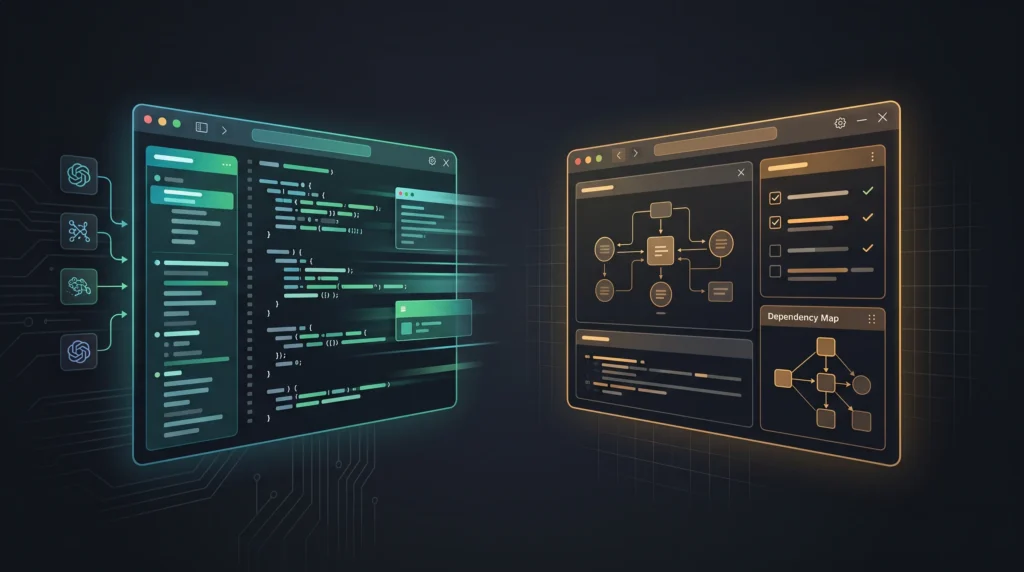
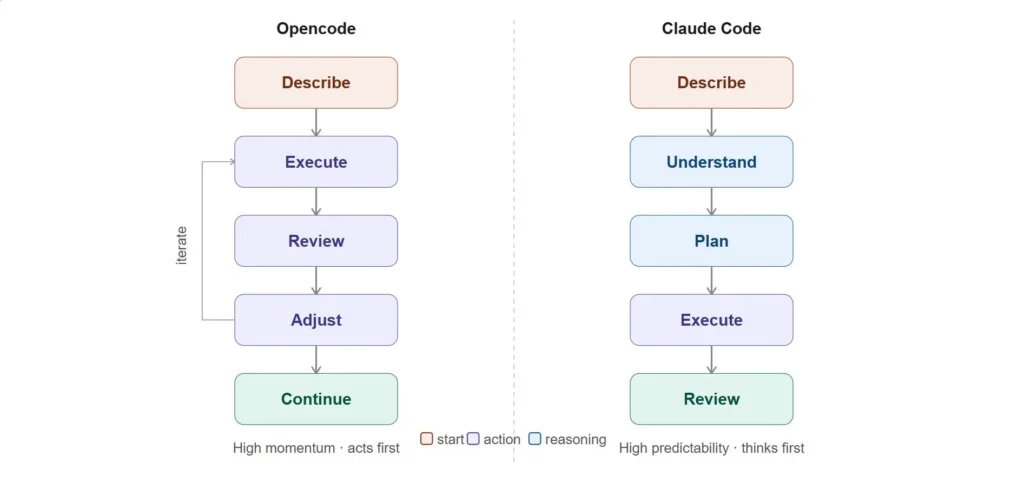
- Brain vs. Muscle: Claude Code stops to think, map dependencies, and draft a game plan before making edits. Opencode is built for pure execution momentum: you prompt it, it acts, and you iterate on the fly.
- Model Choice: Opencode plugs into over 75 model providers via Models.dev (including local setups via Ollama). Claude Code keeps you locked into Anthropic's API.
- Interface Realities: Opencode ships with a beautifully polished terminal interface and a simple Tab toggle between Build and Plan modes. Claude Code relies on a text-heavy interface that gets a lot of flak for readability.
- The Cost: Claude Code runs on a subscription model that hits rate limits fast on heavy workloads, pushing serious users to a $100 a month tier. Opencode's tooling is completely free; you only pay your model provider for the tokens you actually use.
Keep reading for the full breakdown.
High-Level Core Comparison
| Feature / Metric | Opencode | Claude Code |
|---|---|---|
| Core Approach | Execution and customization | Planning and reasoning |
| Primary Workflow | Prompt -> act -> configure | Understand -> plan -> execute |
| Core Strength | Model freedom and flexibility | System-level thinking |
| Best Suited For | Multi-model workflows and local setups | Complex features and deep architecture |
| Licensing | MIT Open Source | Proprietary / Closed Source |
| Pricing Model | Free tooling + direct model costs | Subscription tiers ($20 to $100/mo) |
Deep Dive into Opencode
Opencode is an open-source, terminal-native coding agent designed to stay out of your way. It runs on a slick client/server architecture backed by local SQLite storage. This means if your terminal drops connection mid-task, the background server doesn't care: it keeps chugging along, and you just reconnect to find your session exactly where you left it.

The biggest win here is choice. Because it uses Models.dev, you can route tasks to over 75 different model providers. You get two main modes that you can flip between instantly using the Tab key:
- Build Mode: Full access to your workspace. It can edit files, run bash commands, and touch the whole stack.
- Plan Mode: Read-only mode. It maps out your codebase and talks architecture options without touching a single line of code.
Deep Dive into Claude Code
Claude Code is Anthropic’s official CLI agent. It is closed-source, highly opinionated, and built with a singular focus: squeezing every ounce of performance out of Claude models. You can run it directly from your terminal, or spot it integrated into VS Code, Cursor, JetBrains, and automated CI/CD pipelines.
The behavior here is totally different. Before Claude Code touches a file, it stops. It maps the repository, traces your dependencies, explains its logic, and calls out potential edge cases before running any code. The downside? It can feel painfully slow when you just want to make a quick, trivial edit, and the text layout in the terminal can be tough on the eyes.
Analyzing the Workflow Differences
It really comes down to momentum vs. predictability. Opencode fires immediately, letting you course-correct in a tight, fast feedback loop. It keeps your momentum high. Claude Code forces a brief pause to understand and plan before modifying a file, which takes longer upfront but means fewer surprises on high-stakes tasks.
Note: Running heavy agentic workflows locally will make your laptop fans scream and kill your battery in no time. Offloading your dev tools to an SSD Nodes cloud server keeps your workspace persistent, highly available, and running on premium hardware. Check out our pricing to find a plan that handles your agent workloads without breaking a sweat.
Real-World Feature Showdown: Fixing P0 Issues
To see how these things handle real pressure, we threw both tools into a live web app called LaundryConnect (React, TypeScript, Express, and Socket.IO). An architecture review had flagged a few critical flaws that needed to be killed before deployment.
Test 1: Claude Code Tackles Missing Socket Authentication
Our app’s backend was blindly accepting WebSocket events without checking who was sending them, meaning any client could spoof any user. We asked Claude Code to make the session cookie flow carry through to the socket layer. It read three files and immediately pinned down four explicit security gaps before typing a single line of fix.
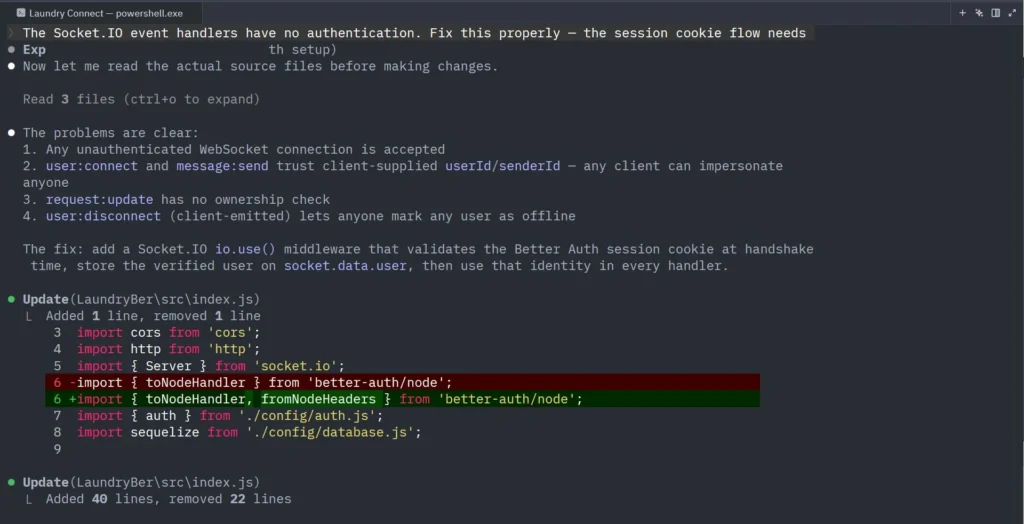
Instead of just slapping a band-aid on the symptom, Claude Code rethought the architecture.
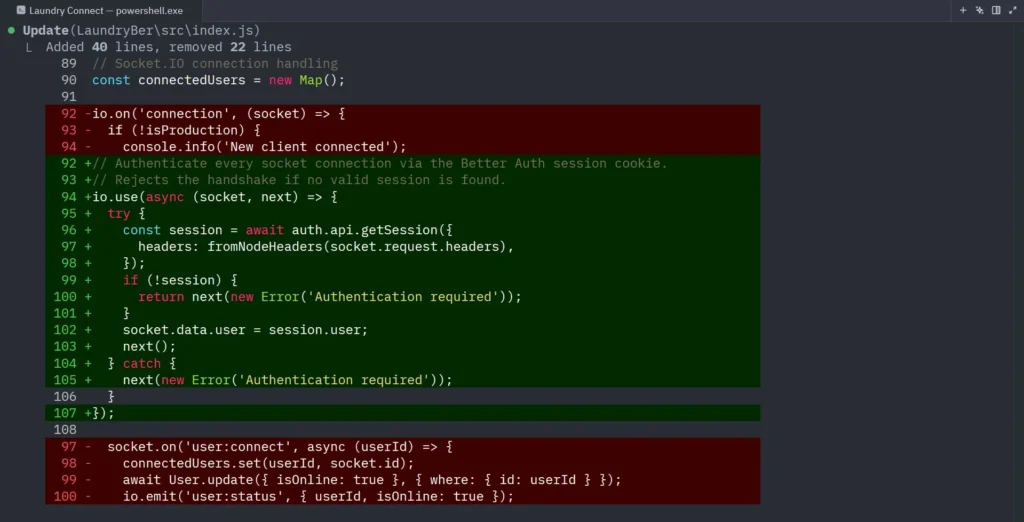
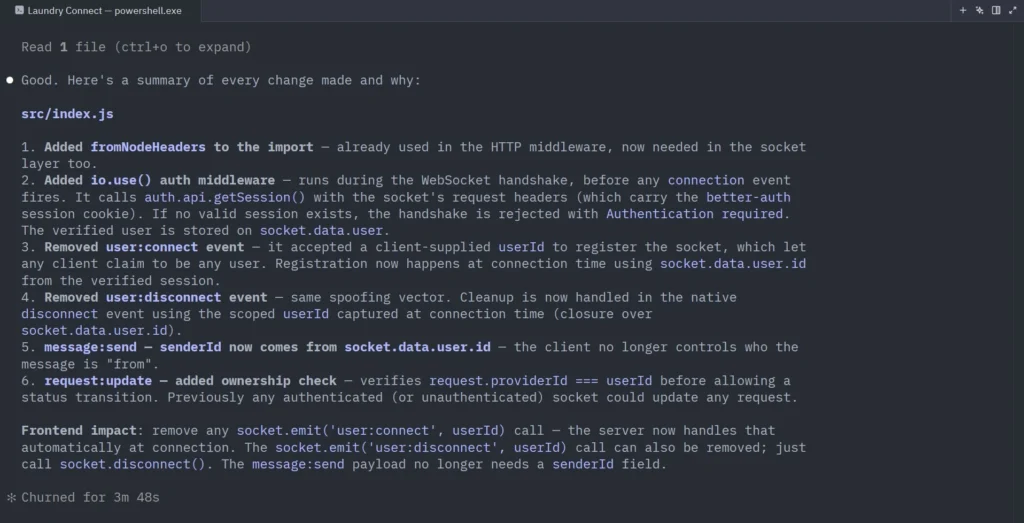
It completely stripped out the vulnerable events and built an asynchronous handshake middleware to handle registration cleanly from the verified session. The whole multi-file rewrite wrapped up with a neat front-end impact summary in under 4 minutes.
Test 2: Opencode Resolves a Frontend-Backend Enum Mismatch
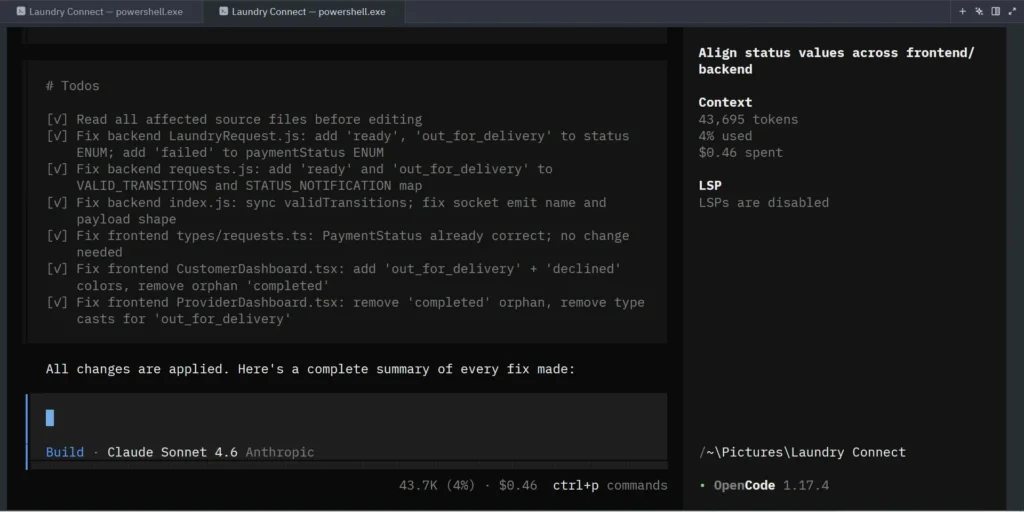
The second breaking issue was a classic sync problem: frontend UI buttons were passing statuses that our backend Sequelize models didn't actually recognize, leading to silent 400 errors in production. We told Opencode to trace the statuses across the stack and align them. It kicked off an intense exploration task, executing 56 tool calls over 2 minutes and 46 seconds to map the project layout.
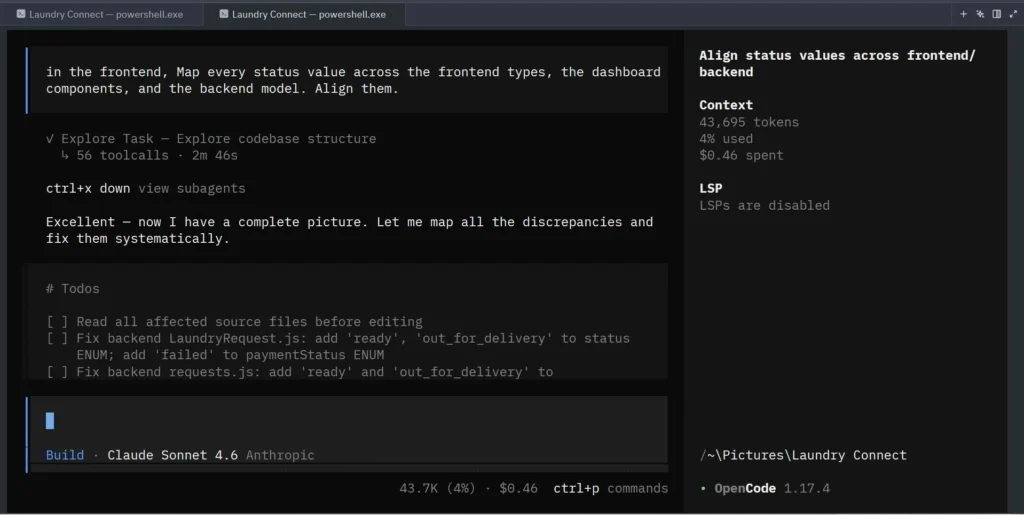
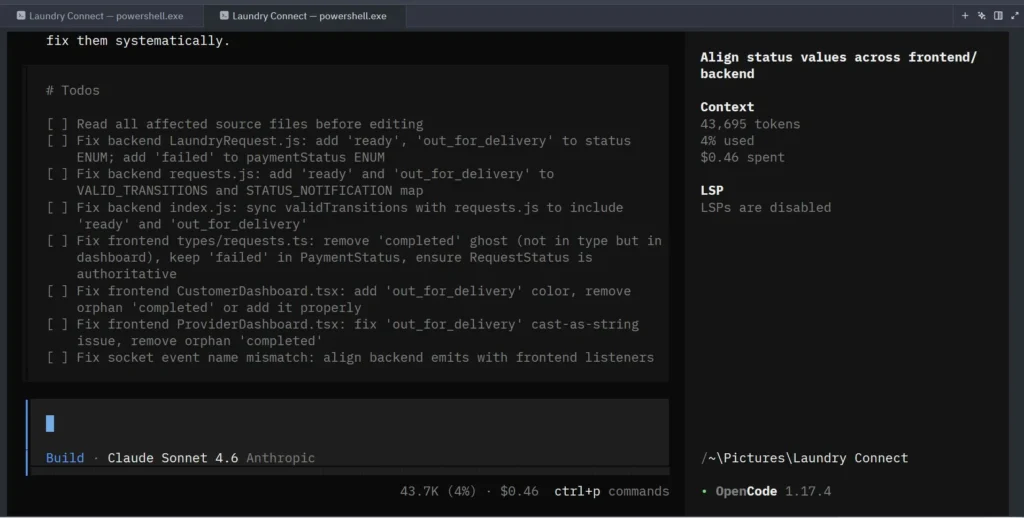
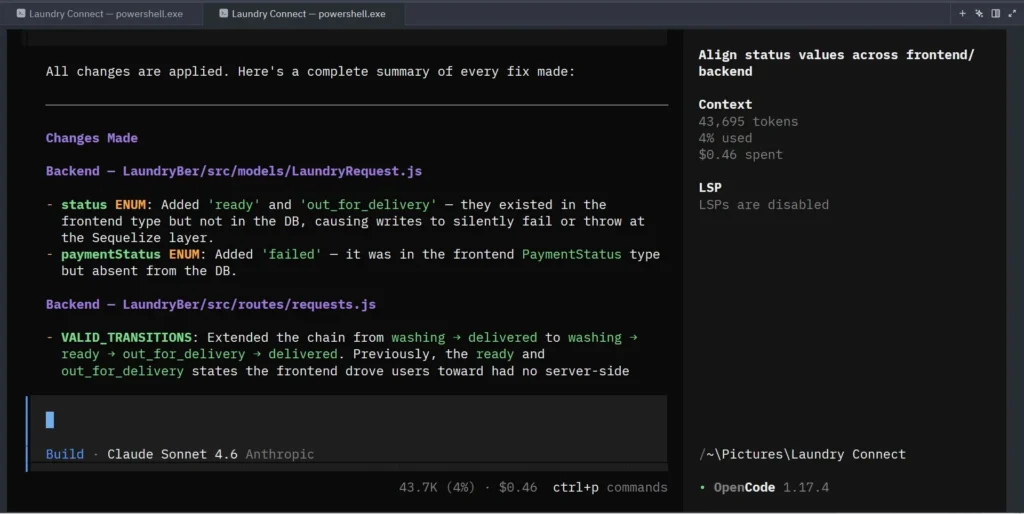
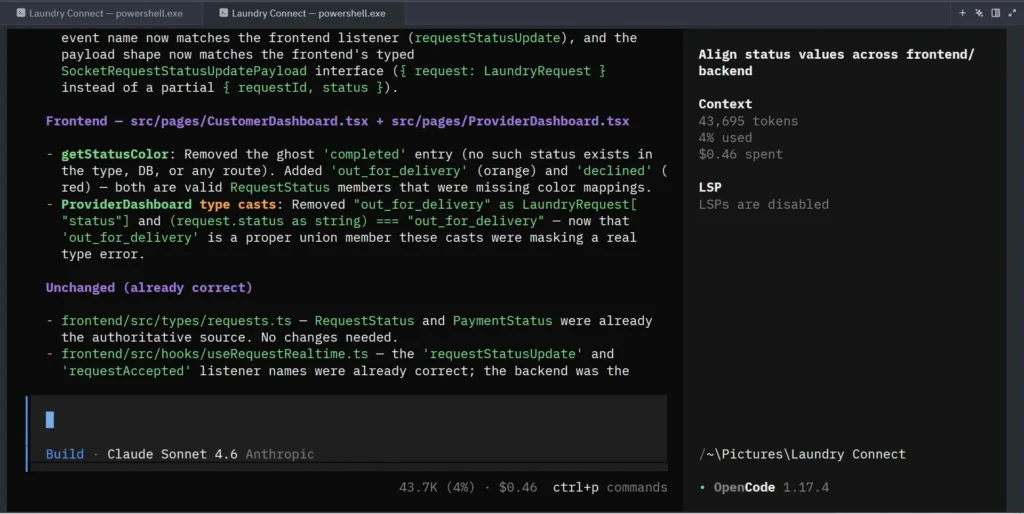
Opencode decided the frontend types should be the source of truth. It modified seven files across both sides of the codebase in one single pass, fixing database enums, updating state transition chains, and even catching a hidden socket payload shape mismatch we hadn’t mentioned.
From Comparison to Orchestration
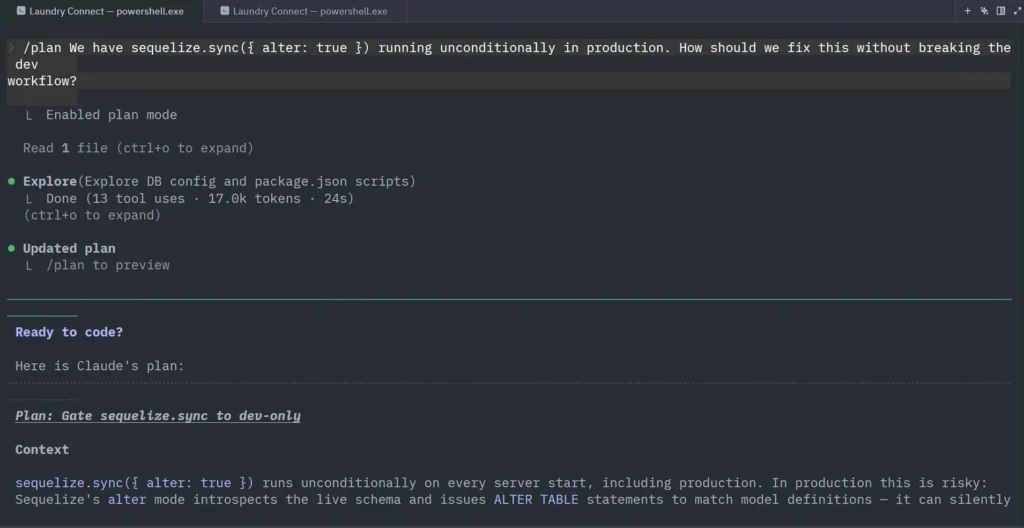
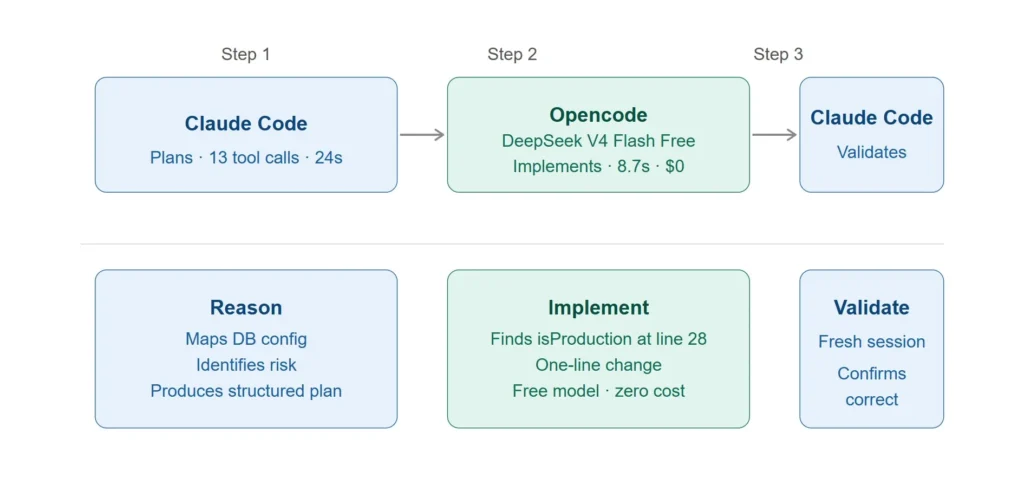
The coolest part about working with model-agnostic tools is that you don't have to choose just one. We had a third bug: an unsafe database sync rule running unconditionally every time the server started, which risked corrupting production data. We used an orchestration workflow to see how they play together:
- Step 1: We put Claude Code into Plan mode so it could investigate the database config and outline a safe, conditional fix without writing anything.
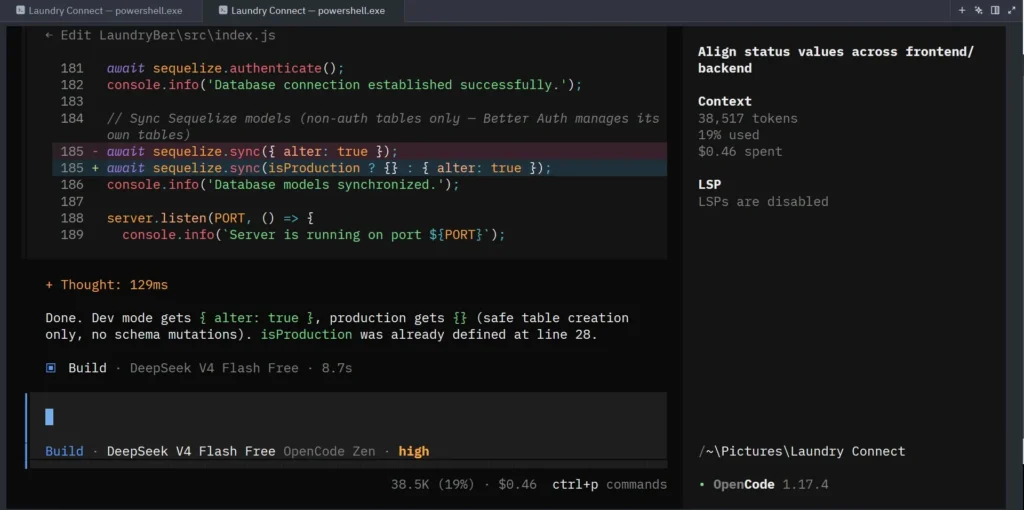
- Step 2: We handed that exact plan to Opencode and routed the task through DeepSeek V4 Flash Free—a zero-cost model on its open tier. It found our production environment flags and implemented the fix in exactly 8.7 seconds for $0.00.
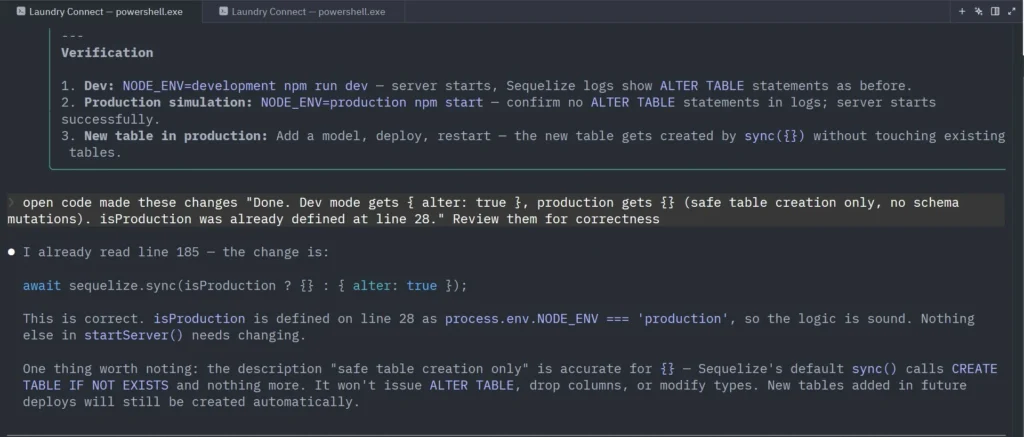
- Step 3: We spun up a quick Claude Code session to review the git diff and verify that the production logic was airtight.
Automation Note: If you want to orchestrate or automate these kinds of environments without manually typing scripts, you can hook your internal logic directly into our official VPS API. It lets you spin up test environments, run agent tasks, or roll back snapshots instantly.
Developer Experience and Pricing Realities
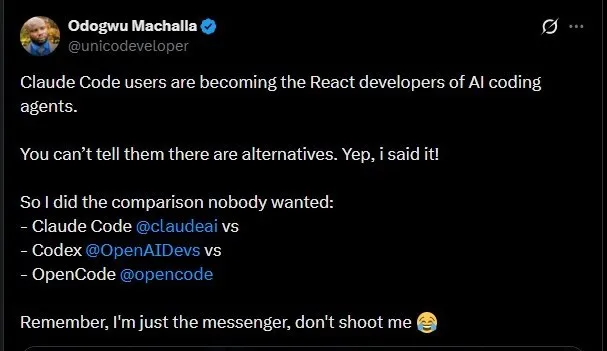
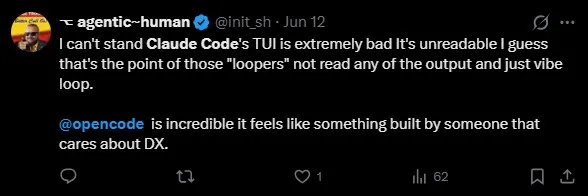
Community discussions show some pretty clear divides. While developers love Opencode’s clean terminal layout and painless model switching, a lot of people openly complain that Claude Code’s TUI layout is messy and unreadable.
On the billing side, Claude Code runs on straight monthly subscriptions. The entry Pro tier costs $20 a month but hits rate limits incredibly fast if you use it for serious daily work, meaning most developers quickly get pushed to the Max tier at $100 a month. Opencode costs nothing out of the box. You plug in your own API keys, use open-weight models for free locally, or use cheap pay-as-you-go routing to keep your daily overhead close to zero. For more on pricing, check out Claude Code Pricing in 2026
Conclusion
Putting Opencode vs Claude Code head-to-head on a live project proves you don't actually need a clear winner. The smartest setup is letting them tag-team your codebase: use Claude Code when a tough problem needs deep structural planning, and flip to Opencode when you want fast, flexible, multi-model execution without burning through your subscription budget. To keep dialing in your cloud environment, check out the resources on our features page or take a look at our transparent compute pricing tiers.